Categories
Community Community Development Education Food and Drink Health and Wellness Politics

Cultivate Charlottesville Is Addressing Food Insecurity at the Roots

By Staff writer I Photos by Kristen Finn

Early morning in one of Cultivate Charlottesville’s partnership gardens located at City of Promise in the West Haven Neighborhood, it is easy to see the physical indication of true collaborative efforts. Cultivate staff, and city residents have worked together to care for the garden complete with a multitude of fresh vegetables including broccoli, greens, and even a banana tree grown using pieces from the parent plant belonging to Joy Johnson, the neighborhood’s eldest living resident. Residents of the neighborhood can come and take what they need from the garden at no charge. This garden, though special, is not a stand-alone passion project, but instead an integral part of the work done through the organization’s efforts to alleviate barriers to food accessibility in Charlottesville, Virginia.

Executive Director, Aleen Carey believes that in reference to the city surrounded by mountains, “We say it’s a foodie town. Everybody talks about gourmet restaurants, farms, wineries. So it’s well known as a foodie town, but it’s not yet a food equity town.” Stepping into the role of director in July, Aleen serves as the successor to the organization’s former Co-directors Jeanette Abi-Nader and Richard Morrison.

 Charlottesville’s food insecurity rate affects 17% of the college town’s population. Hearing this statistic may be shocking for some, but if on the side that the rate affects, is unsurprising for others. Food insecurity in short is the term used to describe the inadequate accessibility and availability of nutritional and safe foods to meet one’s basic needs. Since Charlottesville is home to about 46,000 residents, that means that well over 7,000 people face the struggles that food insecurity brings. Cultivate, a non-profit in the city, aims to address the issue by working with youth and community residents to create equitable and sustainable food systems. The community-focused and led organization works to accomplish this goal according to their mission,  through garden-based experiential learning, growing and sharing healthy food, amplifying community leaders, and advocating for food justice.

Cultivate Charlottesville Staff pictured left to right: Kellyn Kusyk, KJ Howard, Niko Lewis, and Jennifer Minor

Cultivate’s mission to provide healthy foods to the residents of the city who could benefit the most is achieved by utilizing three programs: City Schoolyard Garden, Food Justice Network, and Urban Agriculture Collective. Envisioned with each program uniquely impacting its participants, each of them works together to bring about the change the organization wishes to see. Partnering with nine  Charlottesville City Schools, City Schoolyard Garden educates students on how to grow their own foods, as well as offering them fresh produce to take home. If interested, students have the opportunity to also become Food Justice Interns for the organization which can also lead to growth  in the organization as they age,  with options available to become Community Apprentices and Advocates.

.  The Food Justice Network program partners with over 25 organizations inclusive of food pantries, hospital networks, educational institutions and housing initiatives, this tier works together to pool their resources and implement strategies to achieve food equity and accessibility across the city.

 The Urban Agriculture Collective (UAC)  is special to Cultivate because it is essentially the programs’ genesis. UAC focuses on working with public housing spaces and their residents to grow food free of charge. Carey states, “Someone said, “Oh, you guys haven’t been around for a very long time,” and I was like, wait, we’ve been around for more than a decade, but Cultivate is the thing that’s newer. So the individual programs, Urban Agriculture Collective, UAC actually started as something called Quality Control Council Farm (QCC.)”.  At the time Garrett [Square apartments],  and Miss Karen Waters. were the ones who got the QCC farm going. And then one of our current staff members Jennifer Minor was working in the QCC farm from day one. So she’s still a part of the organization.  It changed from Quality Control Council Farm to Urban Agriculture Collective of Charlottesville. Now we just call it UAC because it’s part of Cultivate Charlottesville. But those guys started in 2007.” The alignment of these three programs assists Cultivate Charlottesville’s infrastructure to hit on all cylinders to battle food insecurity. Aleen shared that even before the COVID-19 pandemic, Charlottesville faced a higher rate of food insecurity compared to the rest of the state. While the city’s average sits at the aforementioned 17%, the state’s average was just under Charlottesville’s, at 11%. Despite Charlottesville’s deep affluence and abundant food resources available in the well-endowed area, the stark disparity emphasized the need for the organization’s comprehensive approach beyond traditional food assistance programs, thus recognizing the importance of systemic change, Cultivate’s integrated approach focuses on not only offering food support but also advocating for policy changes.

Cultivate Charlottesville as an entity is taking on the hard work of establishing food security, but Aleen shares that even with all of their successes, there is still much work to be done. “Another thing that we say that can be a little, um,  touchy is when you look at the last 40 years, we have not effectively moved the hunger needle. Even though we’ve had some of our organizations, and non-profits in this area working on it, we have not changed it to some great degree. I think that Is the same for the United States, not just Charlottesville. I think that’s how it’s gone. So that’s where we say, if we want to be successful, you have to add the system work.” Carey went on to share that Cultivate wants the city at an organizational and political level, to continue thinking about what it will continue to take to make Charlottesville the food equity town it deserves to be. “…we have been nudging them for sure. We’re in our sixth year of an official partnership with the city that’s called the Food Equity initiative and that is money for us to do this work with them.” 

Setting their sights on expanding their reach, the non-profit is working with Charlottesville Parks and Rec to hopefully in the future obtain gardening space at the historic Booker T. Washington Park as well as Benjamin Tonsler Park. Due to Parks and Rec going through a strategic planning phase, the campaign is ongoing.

After a morning of working in the City of Promise garden,  Cultivate staff member KJ Howard asked his fellow colleagues who were loading the truck up to head to their next garden site, “Does anyone need any broccoli to plant at their site?” It is this statement alone that captures the spirit of community fostered by Cultivate Charlottesville, where the focus reaches far beyond individual gain to supporting each other for the shared benefit of the public.


Categories
National Headlines

Conservatives Wanted to Keep Her Book Off Shelves, So She Opened Her Own Bookstore

If you’re keeping up with the headlines, you know that book bans are on the rise across the country. According to advocacy group PEN America, book bans in public schools increased 33 percent last school year. And if you follow our coverage on The Root, you know books written by authors of color and authors who…

Read more…

Categories
CIM Project Community Development Hometown Heroes

She leads a major American newspaper, won a Pulitzer, but when she comes home to Charlottesville, she’s “just Monica”

The Miami Herald won a 2022 Pulitzer Prize in breaking news for its coverage of the Surfsider condominium collapse in June 2021. 98 people died. Executive Editor Monica Richardson (center) took the helm of the paper just six months before the tragedy. Courtesy of Matias J. Ocner/Miami Herald

Charlottesville Tomorrow Editor-in-Chief Angilee Shah talks with Miami Herald Executive Editor Monica Richardson about leading in a pandemic, breaking news and how to build community with journalism.

By Angilee Shah

Monica Richardson is the executive editor of a major American daily newspaper. She is a veteran newsroom leader and a Pulitzer Prize winner. And she is a child of Charlottesville.

“I was that kid that made summer trips to Charlottesville to spend the summers with grandparents and aunts and uncles,” she says. “When I come home, I’m not the editor of the Miami Herald. I’m Monica, you know, who grew up here.”

Her father was in the Air Force so she lived in Washington D.C. and moved a lot growing up.

They returned to Charlottesville for her high school years — she’s class of 1988, Charlottesville High School. She was on the yearbook and newspaper staff, of course. Her first newspaper jobs were at the Culpeper Star-Exponent and then the Charlottesville Observer, a weekly that published from the 1970s until 2004. 

In June, I spent some time talking with Richardson about her journey. I am not a child of Charlottesville, but I’m the editor-in-chief of Charlottesville Tomorrow. I’m from Los Angeles by way of Canada, and have lived in a dozen cities. My career began in international news, then national news and public media and now I am here, living and working in Richardson’s hometown.

Richardson got her start in central Virginia, and then went on to positions at the Lexington Herald-Leader and spent 15 years at the Atlanta Journal-Constitution before becoming executive editor of the Miami Herald in January 2021.

We had a lot to talk about. This transcript is edited for length and, in minor ways, for clarity.

You’ve said that coming through the smaller market papers, in Virginia and Kentucky, was really valuable to you. How has that experience served you in big markets like Atlanta and Miami?

The difference with local journalism is that these are our neighbors, you know? And so that’s the neighborhood approach and sense of community I was able to build by working in places like Culpeper and Charlottesville. What happens in a neighborhood is as important as what happens in the state, and part of our job is to make that community connection between what matters to someone who lives on Grady Avenue and why that’s important at the state level in Virginia. Here in Miami, local news is very different. Local is Haiti and local is Puerto Rico and Cuba — a long list of places. But still, starting and working in Charlottesville and then Culpeper grounded me in a lot of ways. And now I brag about that when I meet with interns and people who have started their careers in big places. I say all the time, I wouldn’t trade my path for anything.

A framed newspaper on a white wall, with several headlines.
“I have a picture of my first story for the Culpeper Star-Exponent on the wall, March 5 1993. And I remember showing up to work in my business suit and heels that day. I realized as a journalist, I would always keep a change of clothes and boots in my car,” says Monica Richardson. Courtesy of Richardson.

So you started as executive editor of the Miami Herald at a pretty difficult time, in January 2021. I also started as editor-in-chief of Charlottesville Tomorrow in the COVID-19 pandemic. But, you know, when the reporters live a mile away in a small town, it’s different. How was it for you joining a large organization in the pandemic?

Really difficult. I actually didn’t move to Miami until mid-February, so I was doing everything virtual before that. It’s still hard. You know, I’m not sure I have to this day met everyone face-to-face from my newsrooms. [Richardson also oversees el Nuevo Herald, the Bradenton Herald and FLKeysNews.com.]

The Miami Herald was in the process of selling its building when I got here. So by the time I got here, there was no building. We have a small office that we use for hurricanes and if people don’t have power and such, but we’re right now looking for a place. It’s a little bit easier now that things are opening up — I can meet with people in the community — but everything for the most part internally has been virtual.

But it also has been remarkable to me to see how newsrooms have managed to keep things going through the pandemic. If you think about all the industries that have failed or not survived — there’s not a day that the paper didn’t come out. There’s not a day that the website wasn’t updated. When I was in Atlanta, when our leadership team said, ‘We’re not coming back tomorrow,’ I remember me and another editor thinking, ‘How are we ever going to do this?’ And then a year later I said, ‘Look at what we did.’

I was working with a lot of different newsrooms around the country when things first shut down. It showed me that we can change how we do things, and we probably should have a long time ago. While it’s been really hard, it also made clear that the well-being of journalists is clearly a problem. Can we change how we operate to make this a more humane profession for people?

I think mental health in newsrooms is something that has really come forward since the pandemic hit. There’s so many different sides of it. I feel for the single journalists with no children — the newsroom is sometimes all they have, Journalists move around a lot so we’re not typically in places where we have our families. And so I think that’s difficult. I think you have journalists who are caregivers. That’s difficult. And then you have journalists who have to homeschool and they’re like, ‘How do I manage that?’

So we’ve learned to try to strike a balance with it. You know, when we won the Pulitzer, typically we would be in a room celebrating together. We had to have a really small group together to celebrate our Pulitzer win. So it’s created challenges, but it’s also created opportunities.

The Surfside condominium collapsed in June 2021, just six months after you started at the Miami Herald. That’s the reporting that won you and the Miami Herald the Pulitzer Prize for breaking news this year. Did you feel like you and the newsroom were ready to cover that catastrophe?

I actually had COVID when the building collapsed on June 24. I was fully vaccinated, but I had it pretty bad — I was on my back. I remember my managing editor calling me pretty early in the morning, around 5 o’clock, a few hours after we already knew what happened. Normally — my mama would say this about me — at two and three in the morning, I’m up. It’s a bad habit, I’m that journalist who works 24/7. But I was sick so I was actually sleeping. So I got that call and suddenly, it felt like I didn’t have COVID anymore. It’s like a big rush when you have big news like that. And our newsroom responded — we had reporters who live close enough to take their bikes or hop on their child’s scooter. This was our community, our backyard.

We just went into immediate planning mode. It was difficult in the sense that you’re managing through a pandemic and trying to get information and get everyone into position. We got through that by being very organized. We had a hotel room that we got right on the beach that became our headquarters for several weeks. We also said from day one, we knew at that moment that this wasn’t a story that was going to be with us for a few days or a few weeks or months even. We knew this was going to be with us for years. And so we needed to structure our thinking and organization around how we were going to sustain the coverage. The same people are working the story and they’re tired, and they’re hot.

We covered it from three perspectives: breaking news; daily news from the victims perspectives, and the investigative side. And all three of those things together got us the kind of coverage we needed — and the thing I think that led to the Pulitzer.

To this day, we’re working that story as if it happened a month ago. Now we’re coming up on the  one year anniversary. After we won the Pulitzer, the first thing that I did was a 98-second moment of silence for the 98 victims in that building. Because we’ve always tried to be very thoughtful about our approach to the coverage. We want to make sure we’re here to help bring accountability to what happened. That is still our number one goal in the story, while at the same time being very respectful and honoring the family members and the first responders, too.

A picture of a page in a year book showing a girl in a brown dress with dangling earrings, smiling and looking off camera.
Monica Richardson as a student at Charlottesville High School. She graduated in 1988. Courtesy of Richardson.

Last question: When I first started at Charlottesville Tomorrow, I went on the radio program, In My Humble Opinion. One of the questions they asked me — which I hadn’t really considered — was, what is it like to be a woman of color leading an organization? I saw the press release that says you are the first Black executive editor of the Miami Herald. It’s weird to get that label, isn’t it?

It is so weird. I remember they sent the press release to me, and I saw that it said, “first Black executive editor in the newspaper’s 117-year history.” I thought, um, I do have some skills too — can’t you just say, digital leader or something? And it was my father who said to me — reminded me — how important this was. This wasn’t just about me. It was bigger than me.

I was amazed how excited people were, even though they didn’t know me.

It wasn’t about me, it was about them feeling like there was someone who would understand the path. That’s a big assumption, right? Because being Black or a person of color is not monolithic. But that someone who looked like them was at a place where they might be able to have a voice.

I believe what Cicely Tyson said, that we don’t just stand on the shoulders of our ancestors, we stand on their backs. I truly believe that. I have a picture of my great great grandmother Olivia on my bedroom desk. That picture is a reminder for me that this is a woman who didn’t have the opportunity to read and write. And here I’m leading one of the biggest newspapers in the country.

I think being a woman of color means that I have a responsibility to make a difference, to live in my purpose. I have a responsibility to show up when someone says they want to celebrate the work that I do. It’s an awesome responsibility and honor that comes with being in this role. Every day is not easy — this has been a tough day. But you know, there have been other tough days and I’m still standing.

Monica’s parents, Roger Richardson, Emilie Jackson Richardson and brother Roger Richardson, Jr. still live in the Charlottesville area. Monica is also a single mother raising her 10-year-old daughter, Lyric Richardson.

—

Angilee Shah is the first editor-in-chief of Charlottesville Tomorrow, a nonprofit news organization. Shah has a 20-year career in journalism, including six years as a founding editor of Global Nation, The World’s coverage of immigration in the US. As a reporter and editor, her work has been read and heard around the world, including a book about everyday lives in China and a trio of investigative stories about the end of Sri Lanka’s 30-year civil war.

Charlottesville Inclusive Media Project

Recognizing that legacy local media systems are part of the problem of structural racism in Charlottesville, the Charlottesville Inclusive Media Project seeks to build a trusted framework for local news and policy reporting grounded in service to communities that builds trust, transparency, and power in inclusive local media and decision-making systems.

The founding partners of the Charlottesville Inclusive Media project include Charlottesville Tomorrow, a nonprofit public service news organization; In My Humble Opinion Talk Show, an African American female-owned digital production company; and Vinegar Hill Magazine, an independent African American publishing company. We work together to create community connections, lift up important conversations, ground our work in service to African American communities and audiences, and build capacity for independent Black media companies and professionals.


Categories
National Headlines

Black students face expulsion, suspension far more than whites in Las Vegas-area schools: report

[et_pb_section fb_built=”1″ admin_label=”section” _builder_version=”3.22″ global_colors_info=”{}”][et_pb_row admin_label=”row” _builder_version=”3.25″ background_size=”initial” background_position=”top_left” background_repeat=”repeat” global_colors_info=”{}”][et_pb_column type=”4_4″ _builder_version=”3.25″ custom_padding=”|||” global_colors_info=”{}” custom_padding__hover=”|||”][et_pb_text admin_label=”Text” _builder_version=”3.27.4″ background_size=”initial” background_position=”top_left” background_repeat=”repeat” global_colors_info=”{}”]

While making up 15% of the student population in Clark County schools in Nevada, 79% of expulsions were served to Black students, according to a report

Black students at one Nevada school district are being expelled and disciplined at far higher rates than white students, according to KSNV-TV.

Numbers for the 2019-2020 school year for Clark County public schools, which has 320,000 students in cities that include Las Vegas, show that Black students made up 15% of the student population but accounted for 40% of suspensions and 79% of expulsions, the outlet reported.

Samples from six schools with the highest expulsion rates all appeared to have similar patterns, the report said.

Classroom Adobe stockAdobe Stock Image

For example, at Desert Pines High School in Las Vegas, Black students made up 59% of the expulsions, even though they made up just 16% of the student body. At Canyon Springs, Black students made up 26% of the student body but 77% of the expulsions. At Cheyenne High School, where Coleman used to go to school, 29% of the students are Black while 59% of the expulsions last semester were handed out to Black students, according to KSNV-TV.

The school district did not make principals from those schools available for comment, the outlet said.

“There are some incidents, including weapons on campus, that are a mandatory expulsion recommendation under Nevada law,” the district said in a statement emailed to KSNV-TV. “A presentation on efforts to address disproportionate discipline was given to the Board of School Trustees at the regular board meeting held on March 10, 2022.”

“We do see where one child commits the exact same infraction as another child and depending on their race gets treated differently. And that’s no secret,” Yvette Williams, chair of the Clark County Black Caucus, told KSNV.

A member of the school district’s diversity and inclusion task force told KSNV it needs to do a better job at hiring diverse employees. 

“When you hire teachers that don’t identify with that language and don’t identify with that culture, you run into problems like this,” Pastor M.J. Ivy said. “And this school district has not righted the ship by hiring more African American, Latino, Asian and Indigenous Americans here for the fifth-largest school district and had the biggest culture change we did not shift with the times.”

The problems in Clark County aren’t new. The Las Vegas Sun reported in 2013 that Black students were three times more likely to be expelled and twice as likely to be suspended than non-black peers.

Just as the school board did this year, it vowed, all those years ago, to study the problem. 

TheGrio is FREE on your TV via Apple TV, Amazon Fire, Roku, and Android TV. Please download theGrio mobile apps today!

The post Black students face expulsion, suspension far more than whites in Las Vegas-area schools: report appeared first on TheGrio.

Source: Black students face expulsion, suspension far more than whites in Las Vegas-area schools: report

[/et_pb_text][/et_pb_column][/et_pb_row][/et_pb_section]

Categories
National Headlines

Woman pretending to be Tyre Sampson’s ‘cousin’ is an adult entertainer facing arson charge: report 

A woman calling herself Shay Johnson is now said to be a fraud as the victim’s family doesn’t know her

A woman acting as a spokesperson for the family of 14-year-old Tyre Sampson is not known to them and is reportedly an adult entertainer who was fired this week after news of her deception broke.

”I feel terrible about it,” William Sierer, the owner of Flash Dancers told the Orlando Sentinel in a phone interview, calling his former employee’s actions “unconscionable.”

Sierer added, “We are part of the community here in Orlando, and I feel terrible about the tragedy,” he said. “I wish we could help in some way.”

As previously reported, ‘Shay Johnson’ has spoken at events, including a march outside of the Orlando FreeFall. She called for it to be demolished after the teenager fell to his death while on the ride at ICON Park last month.

Sampson’s mother told Orange County detectives that “she does not know who Shay Johnson is,” Orange County Sheriff’s Office spokesperson Michelle Guido said in an email Thursday, according to the report.

Guido noted that Johnson telling reporters that she’s related to the boy does not constitute a crime.

Legally known as Lewishena Lavonia Browning, she has been reportedly jailed at least four times in Orange County, Florida, and is currently awaiting trial on felony arson and criminal mischief charges after allegedly setting an ex-boyfriend’s car on fire last fall.

ICON Park attractions, The Wheel, left, Orlando SlingShot, middle, and Orlando FreeFall, right, in Orlando, Fla., on Thursday, March 24, 2022. (Stephen M. Dowell /Orlando Sentinel via AP)

Per the report, the fire also damaged six other vehicles and an awning at the West Vue Apartments. Evidence in Browning’s case includes a Google search for the victim’s girlfriend’s address and another where she wrote, “What is the best thing to set a car on fire lighter fluid gas.”

Browning was injured in the fire and was treated for burns at the Orlando Regional Medical Center.

TheGrio is now on your TV via Apple TV, Amazon Fire, Roku, and Android TV. Also, please download theGrio mobile apps today!” 

The post Woman pretending to be Tyre Sampson’s ‘cousin’ is an adult entertainer facing arson charge: report  appeared first on TheGrio.


Source: Woman pretending to be Tyre Sampson’s ‘cousin’ is an adult entertainer facing arson charge: report 

Categories
National Headlines

Oklahoma boy praised for heroism twice in one day

Sixth-grader Davyon Johnson was honored in his hometown for saving the lives of two people

MUSKOGEE, Okla. (AP) — An Oklahoma sixth-grader was honored by law enforcement and school officials for his heroic actions not just once, but twice in the same day.

Earlier this month, Davyon Johnson used the Heimlich maneuver on a classmate who was choking on a bottle cap at his school in Muskogee. Later that same day, he helped a woman escape from a burning house, the Muskogee Phoenix reported.

Last week, Davyon was named an honorary member of the police and sheriff’s departments at the Muskogee Board of Education meeting, the newspaper reported.

“I felt good, excited,” Davyon said about the honor.

Principal Latricia Dawkins called Davyon a “dual hero” and said the recognition couldn’t have happened to a better person.

“He is just a kind soul and well-liked by his peers and staff alike,” she said.

Dawkins recalled the incident that earned Davyon the honor. She said a student was trying to fill his water bottle and loosen the cap with his mouth. The cap slipped into his throat, she said.

Davyon Johnson honored by Okahoma police (Facebook)

The choking student stumbled into a nearby classroom, where Davyon happened to be, she said.

“Davyon immediately sprinted over and did the Heimlich maneuver,” Dawkins said. “From the account of the witnesses, when he did it the bottle cap popped out.”

Davyon demonstrated how he got behind the choking student, wrapped his arms around the student and “burped him, kind of.”

Davyon helped a woman evacuate her burning house later that day.

“It was a disabled lady and she was walking out of her house,” Davyon said. “She was on her porch. But I thought, being a good citizen, I would cross and help her get into her truck and leave.”

He said the back of the house was on fire, “but it eventually got to the front of the house.”

Davyon said he learned to do the Heimlich maneuver on YouTube and said it is a valuable procedure to learn.

“Just in case you’re in the situation I was in, you can know what to do,” he said.

Davyon’s mother, LaToya Johnson, said she’s not surprised he behaved the way he did. She said her brother, Wendell Johnson, is an emergency medical technician.

“I’m just a proud mom,” she said.

Have you subscribed to the Grio podcasts, Dear Culture or Acting Up? Download our newest episodes now!

TheGrio is now on Apple TV, Amazon Fire, and Roku. Download theGrio today!

The post Oklahoma boy praised for heroism twice in one day appeared first on TheGrio.

Source: Oklahoma boy praised for heroism twice in one day

Categories
National Headlines

Kevin Strickland, exonerated after 43 years, is now a millionaire thanks to generous donors

A GoFundMe created to support Strickland has received more than $1.3 million in donations from the general public.

The general public has donated more than $1.3 million to the recently exonerated Kansas City, Missouri man who spent more than four decades in prison for a crime he didn’t commit.

Kevin Strickland, 62, had his 50-years-to-life prison sentence for a triple homicide set aside by a Missouri judge on Tuesday after evidence presented by attorneys with the Kansas City-based Midwest Innocence Project proved he didn’t commit the crime.

In May, the Jackson County Prosecutor’s office in Independence, Missouri agreed to support Strickland’s exoneration after reviewing the new evidence uncovered by his lawyers.

Kevin Strickland is pictured in an interview room at Western Missouri Correctional Center on Nov. 5, 2019, in Cameron, Mo. (James Wooldridge/The Kansas City Star via AP, File)

Innocence Project attorney Tricia Rojo Bushnell created a GoFundMe page for Strickland in June to help him find a home and pay for his daily needs after his anticipated release.

“What would Mr. Strickland be released from prison to face? A world that he does not know much about,” Bushnell wrote on his GoFundMe page.

“There is no Missouri statute to compensate a person wrongfully convicted of a crime and later found innocent, unless through DNA, and that is not the case here,” she continued. “Mr. Strickland needs financial support to care for his basic needs upon his release from prison. Mr. Strickland has suffered an unimaginable atrocity and no one helped him. Today, he needs your help.”

More than 23,000 people have donated to Strickland’s GoFundMe since it was launched. The campaign’s earlier financial goal was to raise just $7,500. As of Saturday, Nov. 27, the campaign has raised more than $1,355,150.

“Thank you all for your support!” Bushnell wrote in a campaign page update on Nov. 23. “All funds go directly to Mr. Strickland, who the state of Missouri won’t provide a dime to for the 43 years they stole from him.”

Strickland spent 43 years behind bars before his release earlier this week. His incarceration was the longest wrongful imprisonment in Missouri history, according to The National Registry of Exonerations and CNN.

He told CNN he was “still in disbelief” after being released. “I didn’t think this day would come,” said earlier this week.

In 1979, Strickland was convicted of one count of capital murder and two counts of second degree murder for the April 25, 1978 shooting deaths of three people, according to KSHB-TV. The late Cynthia Douglas, a fourth victim and the only person to survive the shooting before dying decades later in 2015, had testified in 1978 that Strickland was at the scene of the triple murder after investigators suggested to her that Strickland’s hair matched her description of the shooter’s, the outlet reported.

But Douglas, who admitted drinking cognac and using marijuana the night of the murders, recanted her story in 2009 after learning Vincent Bell and Kilm Adkins confessed to the crime and testified that Strickland wasn’t involved. Bell pleaded guilty to three counts of second-degree murder for his role in the murders and named two other accomplices who were never arrested.

Kevin Strickland answers questions during an evidentiary hearing regarding his innocence on Monday, Nov. 8, 2021 in Jackson County Circuit Court in Kansas City, Mo. (Tammy Ljungblad/The Kansas City Star via AP)

Strickland’s fingerprints didn’t match the ones found on the murder weapon in 2020, when the Kansas City Police Department and the Jackson County Prosecutor’s office conducted an analysis.

Earlier this year, Jackson County prosecutor Jean Peters Baker and chief deputy prosecutor Daniel Nelson wrote a letter to Strickland’s attorneys saying their office had recommended to authorities that Strickland be released based on all the aforementioned evidence presented after his conviction.

“For these reasons and others, Kevin Strickland’s conviction should be set aside, and he should promptly be released and exonerated,” the attorneys wrote. “This was a thin conviction to begin with and the evidence of conviction has now been eviscerated.”

Have you subscribed to theGrio podcasts, Dear Culture or Acting Up? Download our newest episodes now!

TheGrio is now on Apple TV, Amazon Fire, and Roku. Download theGrio today!

The post Kevin Strickland, exonerated after 43 years, is now a millionaire thanks to generous donors appeared first on TheGrio.

Source: Kevin Strickland, exonerated after 43 years, is now a millionaire thanks to generous donors

Categories
Politics

Charlottesville trial will be a verdict on white supremacy in America

OPINION: What is particularly noteworthy about the civil suit regarding the Unite the Right rally is the federal law it invokes, the Ku Klux Klan Act of 1871

More than four years after the Unite the Right rally in Charlottesville, the victims of the white supremacist mob are seeking justice. And the lawsuit they filed against the individuals and organizations who were responsible for that deadly rally is important to the future of American multiracial democracy.

While this trial may bring monetary compensation to the plaintiffs, more importantly it is part of the process of deciding whether white domestic terrorism and racial violence are an acceptable form of free speech, and if white criminality will go unpunished. This nation must now decide if it will allow organized white supremacist violence to run the show.

Jury selection and opening arguments have been made in the trial of Sines v. Kessler, a civil case filed on behalf of members of the Charlottesville community against 14 men and 10 far-right groups accused of waging the violence in Charlottesville on Aug. 11 and 12 in 2017. The Unite the Right protest, which focused on the removal of the statue of Confederate General Robert E. Lee, culminated with James Fields, a Hitler admirer, plowing his car into a crowd of counter-protesters, killing Heather Heyer, 32, and injuring dozens more. Among the defendants are high-profile white supremacists and neo-Nazis, such as Andrew Anglin, Christopher Cantwell, Nathan Damigo, Matthew Heimbach, Jason Kessler, Elliot Kline, Jeff Schoep and Richard Spencer among others. 

The statue of Confederate General Robert E. Lee stands behind a crowd of hundreds of white nationalists, neo-Nazis and members of the “alt-right” during the “Unite the Right” rally August 12, 2017 in Charlottesville, Virginia. (Photo by Chip Somodevilla/Getty Images)

Cantwell was reportedly inspired by Fox News host Tucker Carlson, who promotes the Great Replacement Theory, a white supremacist theory that elite liberals, Democrats and progressives want to replace white Americans with nonwhite immigrants. Once embraced by fringe elements, the Great Replacement Theory is now a mainstream belief of the Republican Party. The tiki torch-wielding Nazis who shouted “Jews will not replace us” and “You will not replace us” in Charlottesville were referring to that theory.  

Integrity First for America, a nonprofit organization, filed the lawsuit. The plaintiffs seek compensatory and statutory damages for physical and emotional injuries they sustained over the two-day period.

What is particularly noteworthy about this civil suit is the federal law it invokes. The plaintiffs have sued under the Ku Klux Klan Act of 1871, which was passed by Congress to enforce the 14th Amendment, protect the rights of 4 million formerly enslaved Black people and eliminate vigilante violence that terrorized Black folks and threatened the Republican Party’s Reconstruction efforts in the South following the Civil War. The law authorized the president to intervene by declaring martial law, sending in the Army and inflicting heavy penalties against terrorists when the former Confederate states refused to protect Black people and their White allies and attempted to deny “any person or any class of persons of the equal protection of the laws, or of equal privileges or immunities under the laws.” At a time when Black people were almost exclusively sided with the Republican Party, the legislation found opposition among Democrats as well as moderate and conservative Republicans because it targeted private individuals and not just government officials.    

Today, in a nation where the Republican Party now breaks bread with domestic terrorists and relies on Jim Crow tactics, political violence, coups and insurrection to maintain white power, the Ku Klux Klan Act is as relevant as ever.

Earlier this year, Rep. Bennie Thompson (D-Miss.) and the NAACP filed a lawsuit against former President Doanld Trump, his lawyer Rudy Giuliani and white hate groups for conspiring to storm the U.S. Capitol on January 6 in attempt to stop the Electoral College vote of of the 2020 presidential election in violation of the Ku Klux Klan Act. After being selected to chair the House committee investigating the Jan. 6 attack on the U.S. Capitol, Thompson said in July that he dismissed his claim in the lawsuit “to avoid the appearance of a conflict.”

The tragedy in Charlottesville foreshadowed the Capitol insurrection when rightwing militias, neo-confederates, Oath Keepers, Proud Boys, Three Percenters, Qanon cult members and others — with apparent support from some GOP officials — stormed the Capitol and attempted to take over the government for Trump after his election loss to now-President Joe Biden. Other events such as the mass murder at the Emanuel A.M.E. Church in Charleston and the Tree of Life Synagogue in Pittsburgh point to white supremacist violence as the most pressing terrorist threat in America today.  

Meanwhile, as the nation witnesses the bubbling of white rage and violent white supremacist ideology, people wonder what is coming next. And some of us wonder if America is going to make it. The nation formed through slavery and genocide is about to be consumed by the white mob — the forces of racial violence it refused to reckon with.      

The Confederacy lost the Civil War, but is winning the long game. After all, they never went away; they only changed names, and were never held accountable for their actions. The Charlottesville trial is important because this could be the first step to shutting down these white terror groups and putting them out of business. This is a test to see if America will hold white supremacist violence accountable in order to save itself.

Follow David A. Love on Twitter at @davidalove

Have you subscribed to theGrio podcasts, Dear Culture or Acting Up? Download our newest episodes now!

TheGrio is now on Apple TV, Amazon Fire, and Roku. Download theGrio today!

The post Charlottesville trial will be a verdict on white supremacy in America appeared first on TheGrio.

Source: Charlottesville trial will be a verdict on white supremacy in America

Categories
National Headlines

Young Black Girls More Likely To Be Victims Of Police Violence, Study Finds

Young Black Girls More Likely To Be Victims Of Police Violence, Study Finds

A study conducted by the Marshall Project reveals Black children and girls face high amounts of police brutality cases.

November 08, 2021 at 10:19 pm

Black teens, a large number of them being young Black girls, are frequently on the other side of police brutality and violence, a study conducted by The Marshall Project finds. 

By conducting an investigation that targeted six large police departments, the organization discovered roughly 4,000 children 17 and younger had experienced some form of police violence between 2015 and 2020. Nearly 800 people from the study group or about 1/5 of the children were Black girls.

On the side of their counterparts, white girls only made up about 3% of the group with about 120 cases. The data also showed the largely understood facts that Black boys face police brutality at the highest numbers. More than 2,200 cases showing use-of-force studied by the Marshall Project involved Black boys. 

No matter the city –– the project looked into New Orleans, Chicago, Minneapolis, Indianapolis, Columbus, Ohio, and Portland, Oregon –– young Black girls were involved in a high number of use-of-force cases. In New Orleans, the project reports every girl involved in a use-of-force case was Black. However, Black girls only reflect two-thirds of the city’s population.

A spokesperson for the New Orleans police department said they were typically involved in the “lower levels” of force, meaning hands, takedown, firearm pointing, etc. In Indianapolis, the police department said the majority of Black women involved in the cases were both the victims and suspects, which could be the reason behind the large numbers.

“Those numbers are concerning, but the statistics alone present a misleading picture,” spokesman Lt. Shane Foley told the organization, adding that the department continues “to work towards addressing inequities in the community.” 

The Portland police department said the numbers accurately correspond with the number of arrests involving Black people in the city. As for Chicago, the police department spokesperson justifies the study’s findings saying that “sanctity of life is the highest priority” for the city. Many of the other police departments refused to comment, the Marshall Project says. 

A possible reason for the higher numbers could be explained In the 2017 study conducted by the Georgetown Law Center which discovered that most adults looked at Black girls as older and less innocent compared to white girls of the same age. 

 “Our deeply embedded biases about Black children being dangerous applies both to boys and girls, and I think we forget that,” Georgetown Law professor Kristin Henning told the foundation. “We wouldn’t even think about stopping a white girl in quite the way we stop a Black girl.”

Source: Young Black Girls More Likely To Be Victims Of Police Violence, Study Finds

Categories
National Headlines

Black diversity specialist fired by Texas hospital for being ‘too sensitive about race issues’

Joseph B. Hill was fired by Memorial Hermann Health System four days before starting his new role as vice president, chief equity, diversity, and inclusion officer

A Houston, Texas hospital fired its newly-hired vice president, chief equity, diversity, and inclusion officer four days before his first day on the job — for being “too sensitive” about issues of race, according to documents obtained by NBC News.

Joseph B. Hill, who is Black, was sent a two-sentence email revoking his offer for the open position at Memorial Hermann Health System in July despite sailing through over a dozen interviews in a six-week span.

“We regret to inform you that we are rescinding the offer of employment dated July 21, 2021,” read the email obtained by NBC News, sent to Hill from Memorial Hermann’s vice president of human resources Lori Knowles. “We appreciate your interest in the position and wish you much success going forward.”

Joseph B. Hill thegrio.comJoseph B. Hill (Credit: Hill/LinkedIn)

“It was a shock, to say the least,” Hill told NBC News. “I was floored.”

Hill was informed two weeks later by his lawyer, Mark J. Oberti, that Memorial Hermann reversed its decision. The hospital concluded he “was not a good fit” for the company, in part because he was “too sensitive about race issues.”

Other reasons for the short-notice firing included inquires Hill made about receiving a larger relocation budget and hiring staff for his team, as well as his decision to rent a luxury car and charge it to the company, reported NBC News.

“The reasons they listed were just as shocking as rescinding the offer,” Hill told NBC News, adding that the claims were “false and nonsensical” and “they didn’t even contact me to discuss their so-called issues.”

Going into the role with Memorial Hermann, Hill had amassed over 20 years of experience in the DEI field, spending years with the American Cancer Society in Atlanta, Froedtert Hospital in Milwaukee, and Thomas Jefferson University Hospital in Philadelphia before starting his own DEI consulting firm, JBrady5, in 2018.

Memorial Hermann thegrio.comMemorial Hermann (Credit: Facebook)

Declining to comment on the decision, Memorial Hermann executives issued a statement to NBC News that read: “We continue to make great strides in enhancing equity, diversity, and inclusion within our system, but we know there is always more that can be done — which is why we are recruiting for a Chief EDI Officer.”

Surface-level commitment to antiracism reform is not uncommon among institutions, according to Chris Metzler, creator of several highly-regarded Diversity, Equity and Inclusion (DEI) certification programs during his tenure as Georgetown University’s associate dean for human resources and diversity studies.

“Many organizations are not interested in real change,” Metzler told NBC News. “They are looking at diversity as a numbers game.”

Metzler, the ​​president and CEO of a global consulting firm FHW and Associates, added: “Many executives ask me privately, ‘How many Black people do I have to have?’”

Per NBC News, the murder of George Floyd and others in 2020 caused an upward trend of DEI personnel being hired to address power imbalances in the workplace.

However, a recent report from The Conference Board analyzing diversity in over 2,800 American workplaces indicates that few among those hirees were Black —  the percentage of Black DEI directors went up just 0.2% from 2020 to 2021.

Fred Hobby, former president of the Institute for Diversity and Health at the American Hospital Association who has known Hill for years told NBC News: “This is a case study of an organization needing what Joseph Hill would have provided them, but not embracing it.”

Have you subscribed to the Grio podcasts, ‘Dear Culture’ or Acting Up? Download our newest episodes now!

TheGrio is now on Apple TV, Amazon Fire, and Roku. Download theGrio today!

The post Black diversity specialist fired by Texas hospital for being ‘too sensitive about race issues’ appeared first on TheGrio.

Source: Black diversity specialist fired by Texas hospital for being ‘too sensitive about race issues’

Categories
Business Entertainment

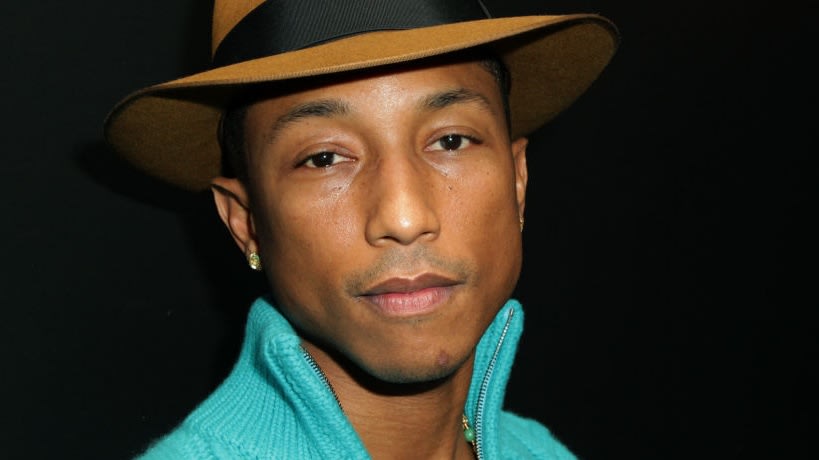
Pharrell Pulls His Music Fest From Virginia, Cites Upset Over Cousin's Fatal Shooting

Pharrell Pulls His Music Fest From Virginia, Cites Upset Over Cousin’s Fatal Shooting

Donovan Lynch, Pharrell’s cousin, was fatally shot by police in March.

Pharrell Williams is displeased with Virginia Beach due to the killing of his cousin, Donovan Lynch, and as a result is canceling his Something in the Water festival in the city, according to WAVY. 

Lynch was one of two people killed during a shooting that also left eight other people wounded, as Blavity previously reported. Police said one of the officers “encountered an armed citizen” and fatally shot Lynch, the Associated Press reports.  

Virginia Beach Police Chief Paul Neudigate said investigators found the weapon “in the vicinity” of the shooting, however, no evidence confirmed that the firearm belonged to Lynch.

Following his cousin’s death, Williams spoke at Lynch’s celebration of life ceremony, calling on Virginia Beach leaders to “do better.” 

“Virginia Beach, you need to talk. Talk about your issues, talk about your struggles, so we can get past them. The misinformation, the mischaracterizations, and — forgive me — but it took the mayor a week to reach out to this family. There are state dignitaries here; there are city officials here — why? Because there’s something staring — there’s something staring in the spirit of Virginia Beach. We must do better,” he said.

Virginia Beach City Manager Patrick Duhaney reached out to Williams in a letter dated Sept. 28, expressing “immense disappointment” after learning the famous festival may not return in 2022.

“The purpose of this letter is to express the immense disappointment felt after learning that the Something in the Water festival may not occur in 2022,” Duhaney wrote. “Before any final decisions are made, the Mayor and I would like to fully understand the sentiment that has brought us to this point. With greater humility, we hope that you and the Festival leadership might be willing to meet with us in person to discuss our partnership.”

The 48-year-old musician penned a letter responding to Duhaney citing this ran by “toxic energy.”

“I wish the same energy I’ve felt from Virginia Beach leadership upon losing the festival would have been similarly channeled following the loss of my relative’s life,” Williams wrote.

“I love my city, but for far too long it has been run by — and with toxic energy,” the “Happy” singer continued. “The toxic energy that changed the narrative several times around the homicide of my cousin, [Donovon] Lynch, a citizen of Virginia, is the same toxic energy that changed the narrative around the mass murder and senseless loss of life at Building Number 2.”

Council liaison for the festival, Aaron Rouse, commented on both letters to WAVY, expressing the city has “a lot of work to do.” The Virginia Beach councilman said he isn’t confident about the concert’s return and admits to a lack of leadership present in the aftermath of the shooting of Lynch.

“There was a lack of leadership when that happened. Myself and another colleague had to call a special session,” he said. “You must provide more updates on the investigation into the deaths of Donovan Lynch and Deshayla Harris.”

Virginia Beach Mayor Bobby Dyer wants to connect with the producer to find a solution.

“We’re disappointed that he’s feeling that way. Something in the Water was very, very big and positive for the City of Virginia Beach. Unfortunately, last year with the COVID, we had to cancel it. But once again … the manager and I want to connect with Pharrell, sit down, talk things out, and that’s what we’re going to take. We are going to try to be positive about this, and we are going to try to make a case that, you know, we are moving forward,” Dyer said.

Source: Pharrell Pulls His Music Fest From Virginia, Cites Upset Over Cousin’s Fatal Shooting

Categories
Entertainment

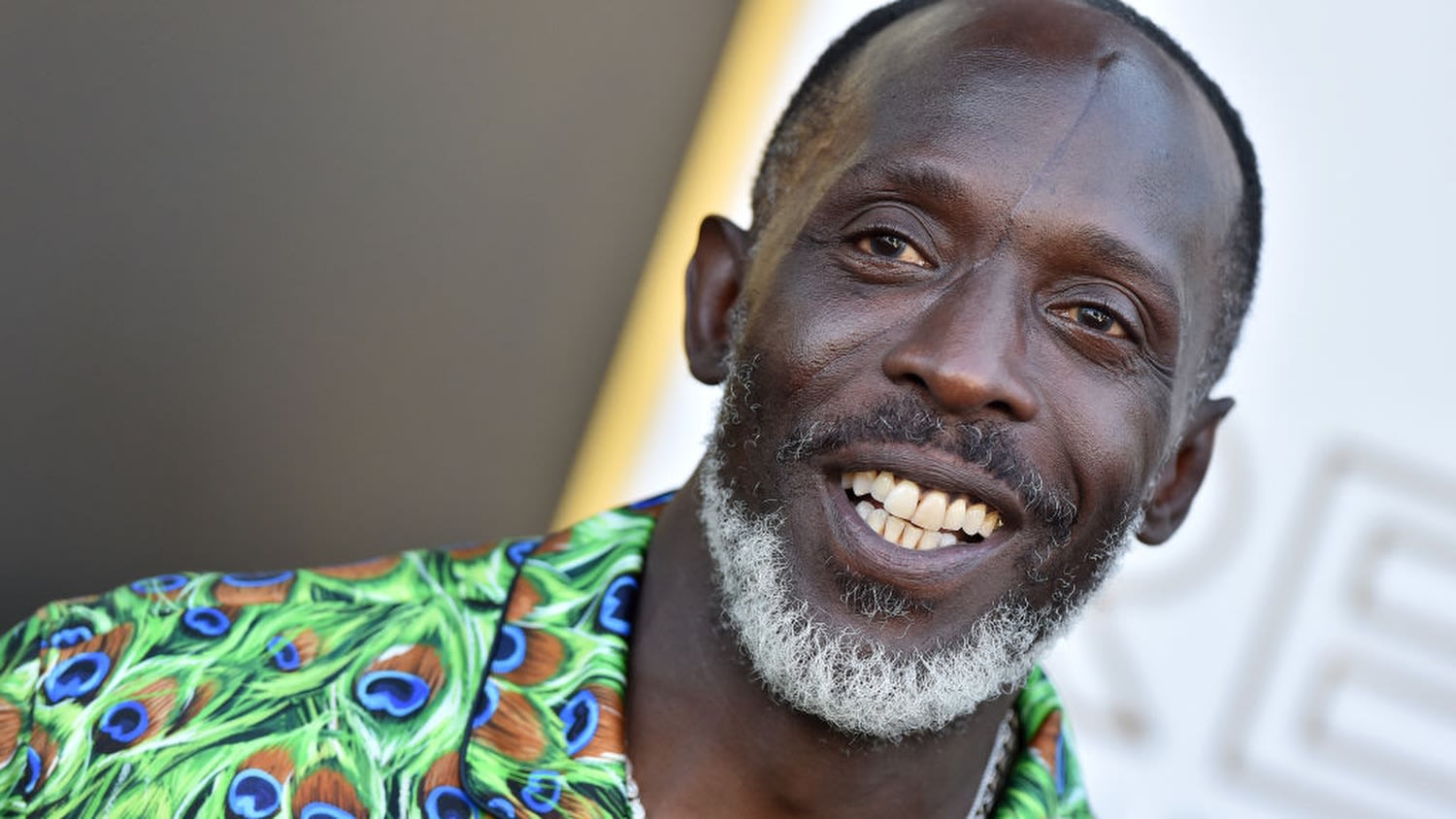
‘The Wire’ Actor Michael K. Williams Found Dead By His Nephew In Brooklyn Apartment

‘The Wire’ Actor Michael K. Williams Found Dead By His Nephew In Brooklyn Apartment

Williams was just 54 years old.

September 06, 2021 at 9:26 pm

Widely revered actor Michael K. Williams, best known for his role in HBO’s classic series, The Wire, has died at the age of 54 reports Rolling Stone.

The five-time Emmy nominee was found dead by his nephew in his Brooklyn apartment according to the New York Post. Drug-related items were found on the scene. The cause of death is not yet known.

“It is with deep sorrow that the family announces the passing of Emmy-nominated actor Michael Kenneth Williams,” Williams’ rep Marianna Shafran said in a statement to The Hollywood Reporter. “They ask for your privacy while grieving this unsurmountable loss.”

Outside of playing Omar Little on The Wire, Williams also starred in other popular HBO series, Boardwalk Empire and Lovecraft Country.

Williams recently performed a tribute to rapper DMX at the 2021 BET Awards, with many fans insisting he play the “How’s It Goin Down” rapper in a future biopic.

Williams began his career as a dancer and previously toured with Madonna per Deadline.

In a 2012 interview with The Guardian, Williams talked about his earlier days as a street dancer.

“People misconstrue when I say I was a dancer,” he told The Guardian in 2012. “I was not classically trained. I was a street dancer, and I got to do what I did in the nightclubs of New York City … I’m a kid from the streets of Brooklyn who got paid to travel the world.”

Williams had previously opened up about his drug addiction, telling NPR he once came into a church seeking help.

“When I came through those doors I was broken. … This was, I would say, around the … third season of The Wire. I was on drugs,” he revealed. “I was in jeopardy of destroying everything I had worked so hard for, and I came in those doors and I met a man who had never even heard of The Wire, much less watched it.”

Police told the New York Post that no foul play is suspected.


Source: ‘The Wire’ Actor Michael K. Williams Found Dead By His Nephew In Brooklyn Apartment