Categories
Community Development Katrina Spencer Travel

Georgia to Germany: 4,656 Miles East

by Katrina Spencer

It was a psychic by the name of Sylvia who works on Broughton street in Savannah, Georgia that first told Lyric Thomas he and his family would be living together overseas. The child of military enlistees, Lyric was no stranger to frequent uprootings, so it wasn’t fear that caused him to doubt her words. The prophecy just didn’t make sense. He hadn’t even applied to a job outside of the United States! How exactly was this supposed to happen? But like so many literary figures from prominent texts, like Oedipus of Greco-Roman mythology and the biblical Jonah who tried to outrun their fates, the prediction would eventually find him, and, it turned out, Sylvia, after all, was right. 

In about a year’s time, Lyric and his family were headed to Stuttgart, Germany. He’d been “headhunted,” or recruited with intention, after having placed his resume in a database some 10 years prior, and was hired to work in cybersecurity. The offer was one easily accepted by both him and his spouse. The transition, however, was a bit bumpier. When he was originally invited to work overseas, the hiring personnel asked if he’d be ready to report to duty in a week’s time. Negative. Lyric, his wife, and kids, had the small issues of a house to sell, family pets to re-home, and school enrollments to navigate. You know: casual, quick, easy. 

The idea of making a significant move wasn’t so hard for Lyric. As a youth, his parents’ careers had taken him from the Virgin Islands to Germany to New York to California and to Georgia. When his folks received “PCS orders” in army speak– a “permanent change of station” in layman’s terms– the family upped and went where called. “I’ve adapted to not staying in places too long,” Lyric says, embracing the “army brat” moniker that many ultra-mobile military kids have. He had to orient himself anew in unfamiliar environments over and over again, which ultimately contributed to his sense of independence. Now, as an adult, Lyric finds little need to seek out the opinions, approval, or direction of others.

For a time, Lyric had settled in Georgia. He attended college there, earning a bachelor’s degree in computer science from a historically Black university, Savannah State. Georgia was where his parents and siblings were and where his children were growing up. However, there were certain recurrent themes in Atlanta, an urban area of 5 million people, that rubbed him the wrong way. Both his car and home had been broken into, he felt that greed surrounded him, and he noted a pervasive “crabs in a barrel mentality”– an approach to life in which every time one member of a community makes headway in an attempt to escape an unpleasant reality, he, she, or they are pulled back down by members of the same group suffering from the same problems. It was toxic. So, when opportunity came a-knockin,’ Lyric was there, primed to answer.

a family of four
Lyric Thomas (left) and his children

When Lyric and his family touched down in Stuttgart, a city of 627,000 people, many of whom are retirees, there were some adjustments to be made. His onboarding would not be without bumps and blips. Their first two months were spent in a hotel. One thing Lyric soon realized was that while he was an army brat, accustomed to diving into strange and new scenarios, his children were not. Also, his wife’s attempts to find work were harder than anticipated. And even though his company had shipped his car across the Atlantic as a service to him, tiny European streets were not made for large, American Dodges. The transition was going to take some time.

Eventually the kinks got ironed out. The family fell into a rhythm and came to love their new surroundings. A key, Lyric recounts, was not to give up too soon. He notes that some of the positions overseas have a high turnover rate because people arrive, expect one type of experience, and let go when those expectations aren’t met. Life in Germany is different than it is in the States, but it’s not necessarily for the worse, an ongoing narrative that Lyric promotes on his TikTok channel @Lyric2notes1. In addition to “army brat,” he calls himself a “share-aholic,” and is documenting a variety of impressions he has as an immigrant abroad. “When I walk out of my house,” he says, “I don’t have to worry about my neighbor having a .45 on his hip.” Gun violence in the United States is not only a concern to its citizens and residents, but several countries, too, have issued travel advisories alerting foreigners of its frequency in the U.S. Lyric feels safer in Stuttgart.

a group of friends pose for a photo
Lyric Thomas (center) poses for a photo with friends known as “The Breakfast Club” overseas

Other changes? Lyric has noticed that the food he eats and buys in Stuttgart isn’t processed and is generally free of preservatives. This means that consumers are more aware of what they’re putting into their bodies. It also means that the food goes bad faster and warrants frequent trips to the grocery store. The climate, too, he says, has an effect on one’s health. Germany is cooler than Georgia and less exposure to the sun means fewer opportunities to get vitamin D, which can be significant, especially for people with pre-existing conditions and/or disorders. But overall, Lyric appears rather contented. When I ask him if he’ll be coming back to the States, his answer is yes, followed by “but not for good.” He insists that Black people do not have to remain anywhere we are not being mentally, physically, spiritually, financially, and/or economically sustained. “If that makes me an Uncle Tom,” he says, “get me a cabin.” 

For more from Lyric, follow him on TikTok on the @Lyric2notes1 channel, and for Black people moving to Germany, Lyric encourages you to seek out social connections and affinity groups as he has with “The Breakfast Club.”


Categories
Business Education

Energy Titan Generating Sustainability through Wind and Hope

Contributed by Milton Steppe of SteppeMedia

Recently, I took a trip by boat with a group of community leaders to visit the wind farm currently under construction by Dominion Energy, just off the coast near Virginia Beach. The wind farm is an amazing engineering and architectural wonder, with turbines standing over 500 feet tall.  When completed thousands of homes will have a new source of energy.

The tour itself lasted about five hours, which allowed the opportunity to engage with the other attendees and Dominion Energy staff in conversations that literally covered a bit of everything. Through our discussions, I learned that Dominion was also focusing on sustainability back on the mainland by contributing $35 million dollars to Historically Black Colleges and Universities (HBCU) through its six-year“HBCU Promise” program. 

11 Schools to Benefit from Dominion Energy’s $35M Higher Education Equity Initiative

The Numbers Don’t Lie: HBCUs Are Changing the College Landscape

HBCUs make up approximately three percent of all colleges and universities in the United States, while enrolling ten percent of all African American students and producing nearly twenty percent of all African American graduates. But most face financial hurdles along the way, with seventy-two percent taking on debt as they work and fight to complete their degrees.  

HBCUs also have a proven track record for setting students up for success. AN HBCU graduate can expect to earn an additional $927,000 in their lifetime–which is 56 percent more than they would without an HBCU degree or certificate–and eight HBCUs were among the top twenty institutions to award the most science and engineering bachelors degrees between 2008-2012. Dominion’s HBCU Promise program is a substantial investment into the lives of black people and black institutions, with $25 million in funding being provided to select universities in Virginia, Ohio, North Carolina and South Carolina, and an additional $10 million scholarship fund that will support African American and other minority students across the company’s service territory. Dominion Energy’s contribution is a major investment not only for the long-term sustainability of HBCUs, but also for generating greater opportunity for black and other minority students to pursue the American dream through quality higher education accessibility. 

Categories
National Headlines

Biden’s climate agenda targets Black America with innovation, HBCU funding

Exclusive: The Biden-Harris administration is expanding electric vehicle power stations into Black neighborhoods and is investing in HBCU renewable energy research

The Biden administration is putting Black America at the center of the solution for climate change by expanding electric vehicle power stations into Black neighborhoods and dumping funds into HBCU renewable energy research. 

This as President Joe Biden is set to tour a Ford Electric Vehicle facility Tuesday.

In an exclusive interview with theGrio, Energy Secretary Jennifer Granholm discussed this engagement as part of President Biden’s equity initiative that sparks tangible creativity and innovation from people who are not normally at the table or in the research lab. 

Read More: Sen. Scott, Rep. Adams sponsor bipartisan bill to improve HBCU infrastructure

Secretary of Energy Jennifer Granholm briefs reporters on the cyber attack on the Colonial Pipeline and the U.S. response during the daily press briefing at the White House on May 11, 2021 in Washington, DC. (Photo by Drew Angerer/Getty Images)

Granholm emphasized the cooperation with Historically Black Colleges and Universities (HBCUs).  

“My first venture out in this corporate environment was to Howard University … it was to announce a $17 million opportunity at DOE [Department of Energy] offering to support college internships and research projects and opportunities and to bolster investment in underrepresented use in minority-serving institutions,” Granholm told theGrio.

Howard University, the alma mater of Vice President Kamala Harris, is currently conducting research on “converting fossil fuels to low cost hydrogen.” 

That H-U team was awarded $400,000 for their energy research.

Howard UniversityCampus of Howard University (Photo: Howard.edu)

Granholm cited that there needs to be a community of diverse researchers. Her examples pointedly offer how discrimination slows down progression in advancements.

“If you don’t have diverse researchers at the table, your research product, whatever it is, is going to not be as effective. So, for example, when we have all this face recognition software out there, all this artificial intelligence, well, they’re the way MIS identifies African-American faces, especially in law enforcement,” says Granholm. 

“Well, if you have more people of color who are on the teams doing the development of that software and that technology, then you will not have that problem. When cars first got seatbelts, they were made for male bodies and women got more and more injured in crashes as a result.

She added, “we have to have diverse participation in the design of these products and the research of them. And that’s why we need to increase the diversity in our laboratories, but of our stem, our science, technology, engineering and math workforce.”

Olay Body Celebrates 60 years of skin care science with all female body wash product development team by investing $100,000.00 in the next generation of women in STEM fields at P&G Mason Business Center on February 21, 2020 in Mason, Ohio. (Photo by Duane Prokop/Getty Images for Olay Body)

The Biden infrastructure plan includes a clean energy switch to electric vehicles and builds 500,000 charging stations in urban and rural areas as it simultaneously rebuilds America’s workforce. But there’s a glaring racial gap when it comes to ownership of energy-friendly electric vehicles. A 2021 paper published by the International Council on Clean Transportation, cites that Black and Latino car buyers make up 41% of traditional gasoline vehicle purchases, but only 12% of electric vehicle purchases.

Gina McCarthy, the Biden administration’s National Climate Advisor said, “We need them available [electric vehicle power stations] to everybody.”

McCarthy stresses “tax and consumer rebates” are also part of the plan to make this wave to the clean energy future affordable to all.

Electric vehicles are displayed before a news conference with White House Climate Adviser Gina McCarthy and U.S. Secretary of Transportation Pete Buttigieg. (Photo by Drew Angerer/Getty Images)

Another progressive piece to this bold puzzle, Granholm said, is that Justice40 investments “must go to communities who have disproportionately negatively experienced environmental pollution as a result of living on the fence line of smokestacks” and “where children can’t even breathe without an inhaler and communities that have felt and have been left behind by markets, for example, coal and power plant communities that have seen the market turn in different directions and are without jobs.”

Justice40 is an initiative that earmarks 40% of federally contracted dollars specifically for minority companies. 

McCarthy supports Granholm saying, “you’re going to see more minority businesses actually getting federal business moving forward.You are going to see us investing in the communities that need those investments first.”

Under the American Rescue Plan umbrella, the Biden administration plans to offer contracts to a more diverse group of companies supporting environmental justice through Justice40.

Meanwhile, as the search for clean energy continues, the nation is working through its current issues of a gasoline shortage after a cyberattack on Colonial Pipeline, which is the largest pipeline system for refined oil products in the United States. 

A man refuels at a gas station on May 12, 2021 in Fayetteville, North Carolina. Most stations in the area along I-95 are without fuel following the Colonial Pipeline hack. (Photo by Sean Rayford/Getty Images)
As of last Thursday when we interviewed Secretary Granholm she said, “by the end of the weekend, the vast majority of gas stations will have gasoline.”  

However, there could be some isolated cases in rural areas that don’t have gasoline for the moment. 

The pipeline extends 5,500 miles long and gasoline moves in a pipeline very slowly, Granholm pointed out.

The disruption created desperation and panic with the shutdown, however, Granholm assured that the gasoline would begin to move out of that line from Texas to the North East.

Have you subscribed to theGrio’s “Dear Culture” podcast? Download our newest episodes now!

TheGrio is now on Apple TV, Amazon Fire and Roku. Download theGrio.com today!

The post Biden’s climate agenda targets Black America with innovation, HBCU funding appeared first on TheGrio.

Source: Biden’s climate agenda targets Black America with innovation, HBCU funding

Categories
National Headlines

PJ Morton 1st artist in residence at Dillard University

Morton will teach master classes in songwriting, music publishing, studio production and talent management

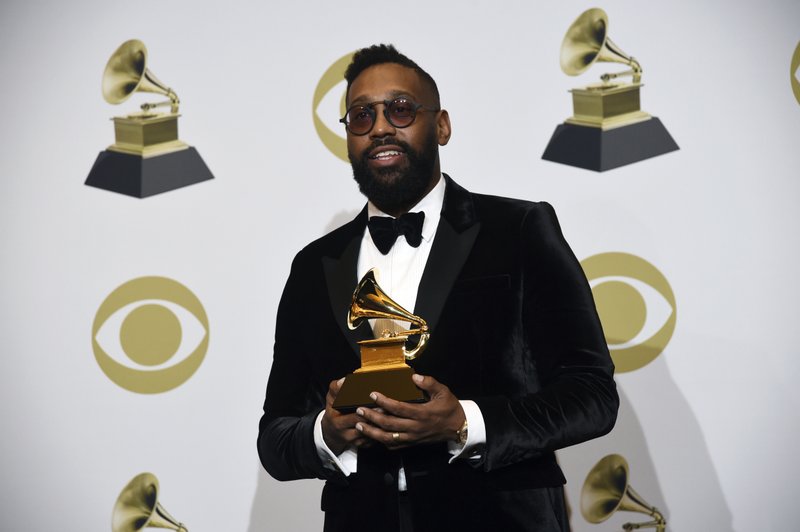
Grammy-winning musician PJ Morton is the first artist in residence at Dillard University, a historically Black private university in New Orleans.

Morton will teach master classes in songwriting, music publishing, studio production and talent management during the academic year that began in January, the school said in a news release Monday.

“I’m so excited to be partnering with Dillard University. As both an HBCU graduate and a New Orleanian, it’s very important for me to pass on any and everything I can to educate and inspire,” Morton said in the statement.

In this Jan. 26, 2020 file photo, PJ Morton poses in the press room with the award for best R&B song for “Say So” at the 62nd annual Grammy Awards at the Staples Center in Los Angeles.(AP Photo/Chris Pizzello, File)

The program is a new one, school spokeswoman Lauren Fox said in an email.

READ MORE: Bowie State to be first HBCU to open animation studio

Morton’s team will offer internships in merchandising, studio production, management and videography, and a spring contest will choose one student to have a single produced by Morton Records, the school’s statement said.

Morton has won two Grammy Awards and been nominated for 14 since 2012, according to the awards website. He won best traditional R&B performance in 2018 with “How Deep Is Your Love” and best R&B song in 2019 with “Say So.”

Photo: Sabree Hill/Dillard University

“This residency brings the best and one of the most influential artists in the music industry to Dillard University,” said Cortheal Clark, chair for the School of Humanities. “The conceptual and musical sophistication of PJ Morton’s work, as well as his commitment to social responsibility, will have a profound impact on our students.”

READ MORE: NBCUniversal partners with HBCUs to launch NBCU Academy

Morton is both a solo performer and the keyboard player for the group Maroon 5. In the past he has served as music director for Solange and has collaborated with, among many others, Erykah Badu, JoJo, Kirk Franklin, Lil Wayne, Rapsody, Stevie Wonder, Tyler Perry and Yebba.

His most recent project, “Gospel According to PJ,” is a Grammy nominee for this year’s best gospel album.

Morton’s father, Bishop Paul Morton, is pastor of Full Gospel Baptist churches in Atlanta and New Orleans and is himself a gospel artist.

Have you subscribed to theGrio’s podcast “Dear Culture”? Download our newest episodes now!

TheGrio is now on Apple TV, Amazon Fire, and Roku. Download theGrio today!

The post PJ Morton 1st artist in residence at Dillard University appeared first on TheGrio.

Source: PJ Morton 1st artist in residence at Dillard University